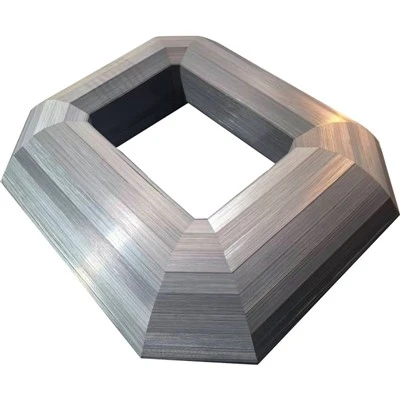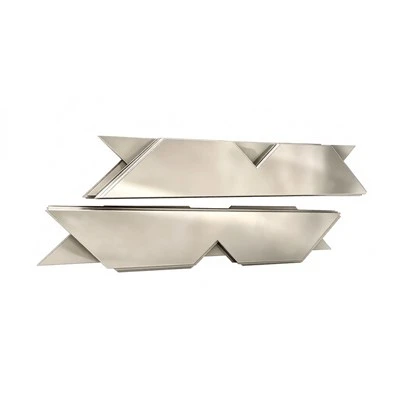

Hey there! As an iron core supplier, I've had my fair share of experiences with iron - cored magnetic amplifiers. These nifty devices are pretty cool, and in this blog, I'll break down the performance characteristics of an iron - cored magnetic amplifier for you.
1. High Magnetic Permeability
One of the standout features of an iron - cored magnetic amplifier is its high magnetic permeability. Iron cores are great at concentrating magnetic fields. When an alternating current (AC) passes through the primary winding of the magnetic amplifier, the iron core catches and guides the magnetic flux. This is super useful because it allows us to get a stronger magnetic field with less current.
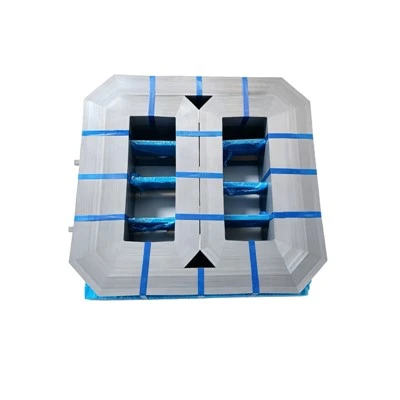
Think of it like a traffic cop directing cars. The iron core directs the magnetic "traffic," making sure it flows smoothly through the device. With a high - permeability iron core, we can achieve a significant output power from a relatively low - power input. This efficiency is a huge plus, especially in applications where power conservation is key. Whether you're looking at Oil Immersed Transformer Cores, the high - permeability iron core helps in efficient energy transfer.
2. Non - linearity
Iron - cored magnetic amplifiers are known for their non - linear characteristics. The relationship between the magnetic field strength and the magnetic flux density in an iron core is not a straight line. As the current in the control winding changes, the magnetic state of the iron core also changes in a non - linear way.
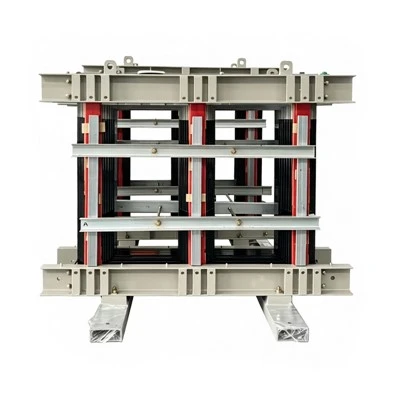
This non - linearity can be both a blessing and a curse. On one hand, it allows us to use the magnetic amplifier for some pretty nifty functions like amplitude modulation. We can vary the output power of the amplifier by adjusting the control current. On the other hand, it can make the design and analysis of circuits with magnetic amplifiers a bit tricky. But hey, that's part of the fun, right? For folks dealing with Rectifier Transformer Cores, understanding this non - linearity is crucial for proper operation.
3. Saturation Effects
Iron cores have a saturation point. When the magnetic field strength gets too high, the iron core can't hold any more magnetic flux. It's like trying to stuff too many clothes into a suitcase; eventually, there's no more room.
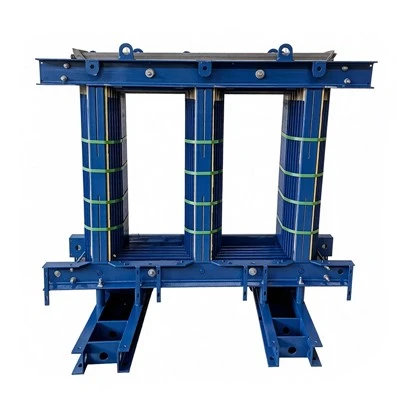
In an iron - cored magnetic amplifier, saturation can limit the maximum output power. Once the core saturates, increasing the input current won't lead to a proportional increase in the output. This is something to keep in mind when designing systems. You need to make sure the amplifier operates within a range where the core doesn't saturate. For Distribution Transformer Core, proper sizing and design are essential to avoid saturation issues and ensure stable power distribution.
4. Hysteresis Losses
Another important performance characteristic is hysteresis losses. When the magnetic field in the iron core changes direction, there's a lag between the change in the magnetic field and the resulting change in the magnetic flux density. This lag leads to energy being lost in the form of heat.
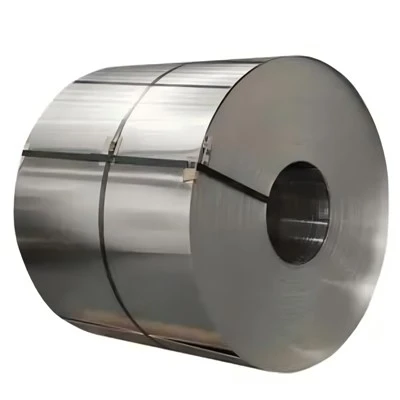
Hysteresis losses are a big deal because they can reduce the efficiency of the magnetic amplifier. The more the core is magnetized and demagnetized, the higher the hysteresis losses. To minimize these losses, we can use high - quality iron cores with a narrow hysteresis loop. For example, Crngo Core has properties that can help reduce hysteresis losses, making it a popular choice in many magnetic amplifier applications.
5. Frequency Response
The performance of an iron - cored magnetic amplifier is also affected by the frequency of the input signal. Iron cores have a limited frequency response. At low frequencies, the iron core can handle the magnetic flux changes quite well. But as the frequency increases, the eddy current losses start to become significant.
Eddy currents are induced currents that flow within the iron core. These currents generate heat and can reduce the efficiency of the amplifier. To deal with high - frequency applications, we might need to use special types of iron cores or laminations. For instance, Crgo Lamination Core is designed to reduce eddy current losses at higher frequencies.
6. Temperature Dependence
The performance of an iron - cored magnetic amplifier is temperature - dependent. As the temperature of the iron core increases, its magnetic properties can change. The permeability might decrease, and the saturation point could shift.
This temperature dependence can cause problems in applications where the amplifier needs to operate in a wide temperature range. We need to take this into account when designing the system and might need to use temperature - compensation techniques. For example, in some high - performance applications, we might use additional components to counteract the effects of temperature changes on the iron core.
7. Control Characteristics
One of the main advantages of an iron - cored magnetic amplifier is its ability to be controlled. By changing the current in the control winding, we can adjust the output power of the amplifier. This control can be very precise, allowing us to use the magnetic amplifier in applications where accurate power regulation is required.
The control characteristics also make the magnetic amplifier suitable for use in feedback control systems. We can use the output signal of the amplifier to adjust the control current, creating a closed - loop control system that can maintain a stable output under varying conditions.
Why Choose Our Iron Cores?
As an iron core supplier, we offer a wide range of high - quality iron cores that are perfect for magnetic amplifier applications. Our cores are designed to minimize losses, whether it's hysteresis losses or eddy current losses. We use the latest manufacturing techniques to ensure that our cores have consistent magnetic properties.
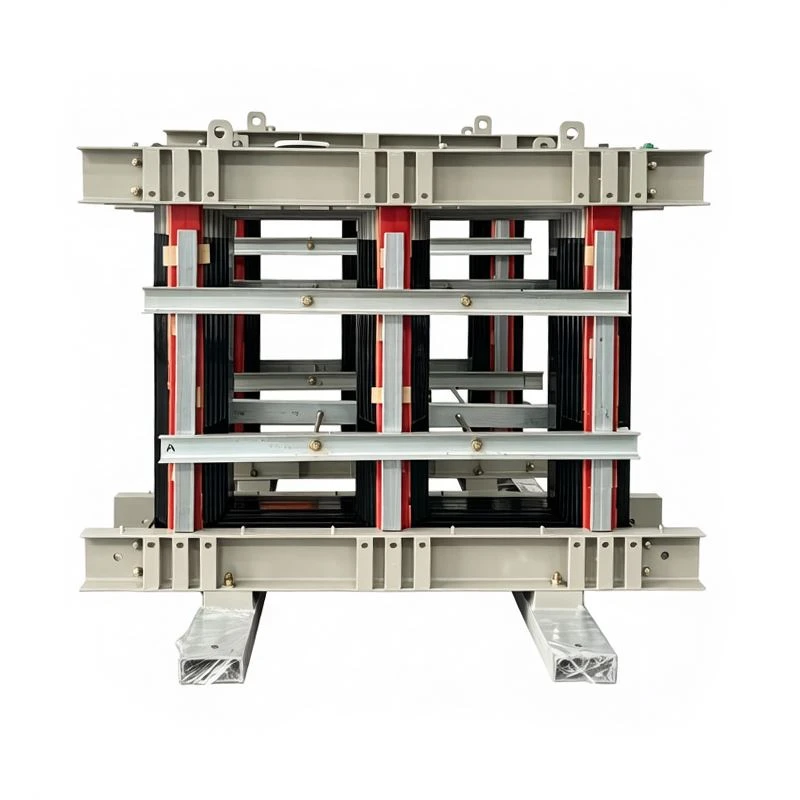

Whether you're working on a small - scale project or a large - scale industrial application, we have the right iron core for you. Our Oil Immersed Transformer Cores, Rectifier Transformer Cores, Distribution Transformer Core, Crngo Core, and Crgo Lamination Core are all tested to meet the highest standards.
If you're in the market for iron cores for your magnetic amplifier projects, don't hesitate to reach out. We're here to help you find the best solution for your specific needs. Whether you have questions about the performance characteristics, sizing, or any other aspect, our team of experts is ready to assist you. Contact us to start a procurement discussion and take your magnetic amplifier projects to the next level.
References
- Chapman, S. J. (2012). Electric Machinery Fundamentals. McGraw - Hill Education.
- Fitzgerald, A. E., Kingsley, C., & Umans, S. D. (2003). Electric Machinery. McGraw - Hill.
- Grover, F. W. (1946). Inductance Calculations: Working Formulas and Tables. Dover Publications.